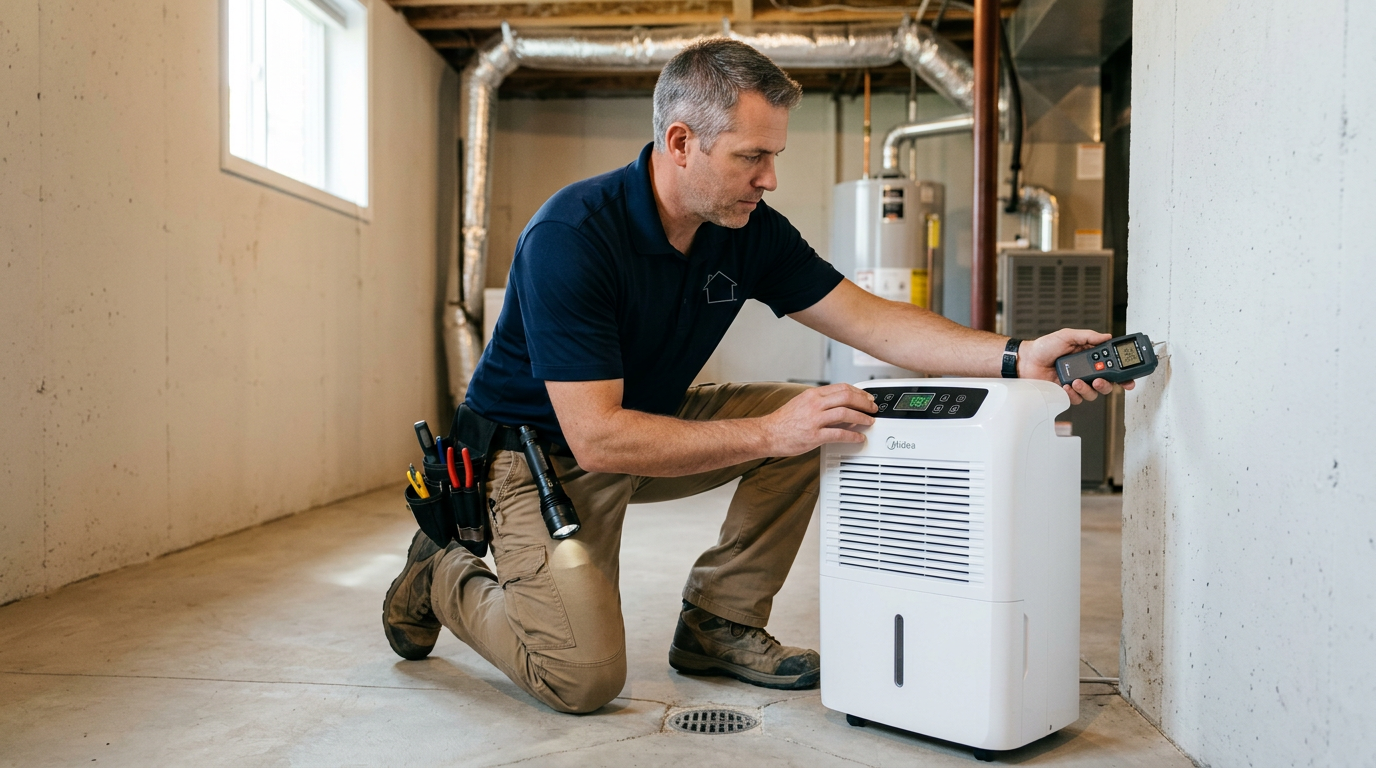
Dehumidifiers, including popular brands like Midea, are vital appliances designed to remove excess moisture from the air, playing a crucial role in maintaining a healthy indoor environment and preserving the structural integrity of a home. During a home inspection, the presence and condition of a dehumidifier, particularly in moisture-prone areas like basements, crawlspaces, or laundry rooms, are significant indicators of a home’s overall moisture management strategy. A home inspector evaluates these units not just for their operational status, but for their effectiveness in mitigating potential issues such as mold growth, wood rot, and pest infestations that thrive in high-humidity conditions. Complete Guide to how to clean houseAdd tag
What an Inspector Looks For: Midea Dehumidifiers and Moisture Control
When an SD Home Inspect professional encounters a Midea dehumidifier, or any dehumidifier, during an inspection, the evaluation goes beyond simply checking if it turns on. The focus is on its functional integrity, appropriate application, and its contribution to the overall moisture control strategy of the property. Here’s a detailed breakdown of what an inspector assesses:
Operational Status and Performance
- Power and Controls: The inspector will verify that the unit powers on, the display (if digital, common on Midea units) is functional, and controls respond correctly. This includes testing different settings like fan speed and humidity levels.
- Airflow and Noise: Proper airflow indicates the fan motor is working efficiently. Excessive noise, rattling, or grinding sounds can point to motor issues, loose components, or a failing compressor.
- Condensate Production: While a full cycle test isn’t always feasible, the inspector will look for signs of recent condensate collection in the reservoir or observe if the unit is actively drawing moisture from the air, which can sometimes be felt as cooler, drier air being expelled.
Placement and Sizing
The location of the dehumidifier is critical. It should be placed in the area where humidity is highest, typically a basement, crawlspace, or a damp utility room. The inspector will consider if the unit’s capacity (measured in pints per day) appears appropriate for the size and typical humidity levels of the space it serves. An undersized unit will struggle to maintain desired humidity, while an oversized one might cycle unnecessarily, wasting energy.
Drainage System Evaluation
Midea dehumidifiers often offer multiple drainage options: a removable bucket or continuous drainage via a hose. The inspector will examine:
- Bucket Condition: Check for cracks, leaks, or signs of overflow. The float switch, which prevents overflow, should be functional.
- Continuous Drain Hose: If a hose is used, the inspector will verify it’s properly connected, free of kinks, and sloped correctly to ensure gravity drainage. The discharge point is crucial; it should drain into an appropriate receptor like a floor drain, utility sink, or condensate pump, not directly onto the floor or into an HVAC return duct.
- Condensate Pump (if present): For situations where gravity drainage isn’t possible, a condensate pump lifts the water to a drain. The inspector will check for pump operation and proper discharge.
Filter Condition and Maintenance
Dehumidifiers, including Midea models, have air filters that prevent dust and debris from entering the coils and fan. A clogged filter significantly reduces efficiency and can lead to unit malfunction. The inspector will visually check the filter’s cleanliness and note if it requires cleaning or replacement.
Electrical Safety
The power cord and plug will be inspected for damage, fraying, or improper connections. Ideally, the unit should be plugged into a dedicated circuit or a GFCI receptacle/outlet, especially in damp environments like basements or crawlspaces, to prevent electrical shock hazards.
Signs of Moisture Intrusion and Secondary Damage
The presence of a dehumidifier often indicates a historical or ongoing moisture concern. The inspector will use a moisture meter to check surrounding structural components (wood framing, drywall) for elevated moisture levels, even if the dehumidifier is operating. Signs of past or present moisture intrusion, such as water stains, efflorescence on masonry, or visible mold growth, will be documented. A dehumidifier is a mitigation tool, not a solution for active water leaks.
Common Defects and Red Flags
During a home inspection, several issues related to Midea dehumidifiers and general moisture control can raise red flags:
- Non-Operational Unit: A dehumidifier that doesn’t power on or operate indicates a significant defect. This could be a simple electrical issue or a more complex compressor failure.
- Visible Water Leaks or Pooling: Water around the unit, either from a cracked bucket, a disconnected drain hose, or an overflowing reservoir, points to immediate problems and potential water damage.
- Excessive Humidity Readings: Even with a dehumidifier present, if a moisture meter shows elevated humidity in the area (above 60% relative humidity), the unit may be undersized, malfunctioning, or there’s an unaddressed moisture source.
- Mold or Musty Odors: The presence of mold growth on the unit itself or in the surrounding area, accompanied by musty odors, indicates the dehumidifier is not effectively controlling humidity, or there’s a larger moisture problem at play.
- Damaged Power Cord/Plug: Frayed cords or bent/missing ground prongs are electrical safety hazards.
- Clogged or Missing Filter: A severely dirty filter restricts airflow, reduces efficiency, and can lead to premature unit failure. A missing filter allows dust into the internal components.
- Improper Drainage: Draining directly onto a dirt floor in a crawlspace, into a sump pump that frequently fails, or into an area that can cause foundation issues is a significant concern.
- Unit Cycling Constantly: While some cycling is normal, a unit running non-stop without significantly reducing humidity may be undersized or failing.
Common Homeowner Mistakes
Homeowners often inadvertently hinder the effectiveness or inspection of their dehumidifiers:
- Neglecting Filter Maintenance: Failing to clean or replace the air filter regularly is the most common mistake, leading to reduced efficiency and potential breakdowns.
- Ignoring Drainage: Allowing the collection bucket to overflow repeatedly or not ensuring continuous drainage systems are clear and properly sloped.
- Obstructing Airflow: Placing the dehumidifier in a cramped corner, against a wall, or surrounded by stored items, which restricts air intake and exhaust.
- Turning Off Units in Damp Areas: Deactivating a dehumidifier in a perpetually damp basement or crawlspace, especially during humid seasons, can quickly lead to a resurgence of moisture problems.
- Blocking Access: During an inspection, ensuring clear access to the dehumidifier, its power source, and drainage components is crucial. Boxes, furniture, or stored items blocking the unit can prevent a thorough evaluation.
- Not Addressing the Root Cause: Relying solely on a dehumidifier to solve a persistent moisture problem (e.g., active foundation leaks, poor exterior grading) rather than addressing the source of water intrusion.
Repair Implications, Cost vs. Benefit & Negotiation
Addressing dehumidifier issues promptly offers significant benefits. A non-functional or poorly maintained dehumidifier is not just an inconvenience; it’s a gateway to more severe and costly problems:
- Preventing Costly Damage: The cost of replacing a filter (under $30) or a drain hose (under $20) is minimal compared to potential mold remediation (thousands of dollars) or structural repairs due to wood rot caused by prolonged high humidity.
- Improving Indoor Air Quality: A properly functioning dehumidifier reduces allergens, dust mites, and mold spores, leading to a healthier living environment.
- Energy Efficiency: A well-maintained unit operates more efficiently, saving on electricity bills.
- Negotiation Leverage: For sellers, ensuring all appliances, including dehumidifiers, are in good working order and properly maintained can reduce potential repair requests, credits, or price concessions during negotiations. Buyers will appreciate a home where moisture management is clearly a priority. Conversely, a malfunctioning dehumidifier with visible signs of moisture damage will likely lead to significant negotiation points.
The decision to repair or replace often depends on the unit’s age, the nature of the defect, and the cost of parts. Minor issues like a clogged filter or a kinked hose are simple fixes. Major component failures (compressor, fan motor) in older units might warrant replacement, as new Midea dehumidifiers are often energy-efficient and come with warranties.
Printable Home Inspection Checklist: Dehumidifier Evaluation
Use this checklist to prepare for an inspection or to perform your own routine check of your home’s dehumidifier:
- Verify Power: Is the unit plugged in and receiving power? Is the power cord free of damage?
- Test Operation: Turn the unit on. Does the fan run? Does the compressor engage (listen for a hum)?
- Check Controls: Do all buttons and digital displays function correctly? Can you adjust settings?
- Inspect Filter: Remove and visually inspect the air filter. Is it clean, or does it require cleaning/replacement?
- Examine Drainage:
- If using a bucket: Is it free of cracks? Does the float switch engage when full?
- If using a hose: Is it securely connected, free of kinks, and properly sloped to a suitable drain?
- If using a pump: Does the pump activate and discharge water when the reservoir is full?
- Assess Placement: Is the unit in an open area, away from walls and obstructions, allowing for proper airflow?
- Listen for Abnormal Noises: Are there any loud grinding, rattling, or squealing sounds?
- Check for Leaks: Is there any standing water or dampness around the unit?
- Smell for Odors: Is there a musty smell emanating from the unit or the surrounding area?
- Observe Humidity: If you have a hygrometer, is the relative humidity in the area within a healthy range (typically 30-50%)?
When to Call a Specialist
While a home inspector can identify defects, certain issues require the expertise of a licensed specialist:
- HVAC Technician: If the dehumidifier powers on but isn’t removing moisture, or if there are unusual noises from the compressor or fan motor, an HVAC technician can diagnose and repair internal component failures.
- Electrician: For persistent electrical issues, such as tripped breakers, faulty outlets (especially if a GFCI isn’t holding), or concerns about wiring, a licensed electrician should be consulted.
- Mold Remediation Specialist: If significant mold growth is discovered on or around the dehumidifier, or if the dehumidifier is failing to control humidity leading to widespread mold, a mold remediation specialist can safely assess and remove the contamination. The EPA provides guidance on mold and indoor air quality.
- Plumber: For complex drainage issues, especially if the dehumidifier is connected to the home’s plumbing system or if the discharge is causing other plumbing problems.
- Waterproofing Contractor/Structural Engineer: If the dehumidifier’s presence points to a larger, unaddressed moisture intrusion issue (e.g., foundation leaks, poor exterior grading), a waterproofing contractor or structural engineer may be needed to identify and rectify the source of water.
For general home inspection standards and best practices, resources like InterNACHI home inspection guidance offer valuable insights into what constitutes a thorough inspection.
Frequently Asked Questions (FAQ)
Q1: How often should I clean my Midea dehumidifier’s filter?
A1: It’s generally recommended to clean the air filter every 2-4 weeks, or more frequently if the unit is in a dusty environment or operating continuously. A clean filter ensures optimal efficiency and prolongs the unit’s lifespan.
Q2: My dehumidifier runs constantly but the humidity isn’t dropping. What could be wrong?
A2: This could indicate several issues: the unit might be undersized for the space, the filter could be clogged, the coils might be frozen, or the compressor could be failing. It could also mean there’s a significant, unaddressed source of moisture intrusion that the dehumidifier cannot overcome. An HVAC technician can diagnose the specific problem.
Q3: Is it okay for my dehumidifier to drain into a floor drain?
A3: Yes, draining into a floor drain is generally acceptable, provided the drain is functional, clear of obstructions, and properly connected to the home’s wastewater system. Ensure the hose has a continuous downward slope to prevent standing water and potential clogs.
Q4: Can a dehumidifier prevent mold?
A4: A dehumidifier can significantly help prevent mold growth by keeping indoor humidity levels below 60%, which is typically the threshold for mold proliferation. However, it cannot remove existing mold or fix the underlying cause of water intrusion. For active leaks or existing mold, professional remediation and repair of the source are necessary.
Q5: What’s the ideal humidity level for my home?
A5: Most experts recommend maintaining indoor relative humidity between 30% and 50% for comfort, health, and to prevent moisture-related issues like mold growth and wood damage.