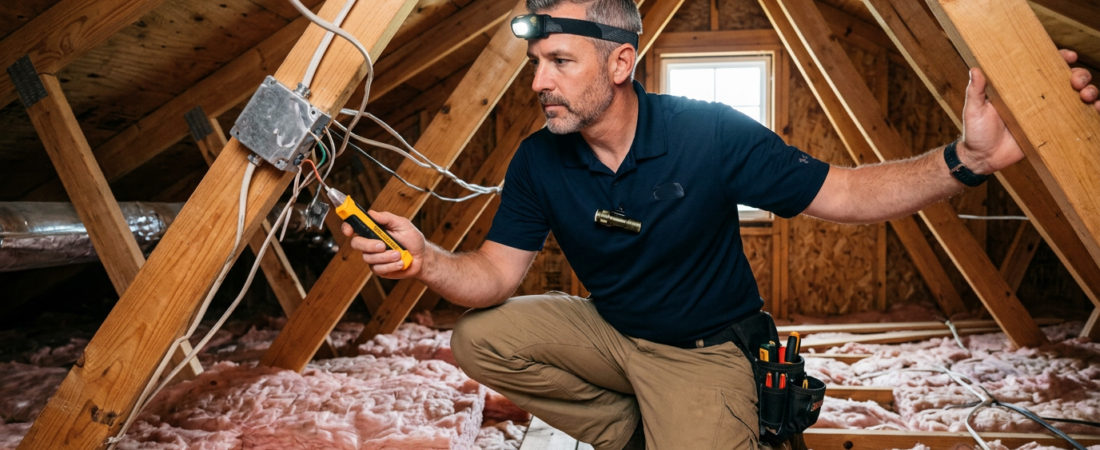
Smoke detectors are among the most crucial safety devices in any home, providing early warning of fire and significantly increasing the chances of escape. For American homeowners, buyers, sellers, and real estate professionals, understanding their function, proper placement, and maintenance is essential. A professional home inspection includes a practical evaluation of these life-saving devices, but ongoing homeowner vigilance is key to ensuring continuous protection.
The Role of Smoke Detectors in Home Safety
Smoke detectors work by sensing smoke particles in the air and emitting a loud alarm. There are primarily two types of smoke detection technologies commonly found in residential settings:
- Ionization Smoke Detectors: These are generally more responsive to fast-flaming fires. They contain a small amount of radioactive material that ionizes the air between two electrically charged plates, creating a current. Smoke disrupts this current, triggering the alarm.
- Photoelectric Smoke Detectors: These are typically more sensitive to slow, smoldering fires, which produce large amounts of smoke. They work by directing a light source into a sensing chamber. When smoke enters the chamber, it scatters the light onto a sensor, activating the alarm.
- Dual-Sensor Smoke Detectors: Many modern detectors combine both ionization and photoelectric technologies to offer broader protection against different types of fires.
Proper placement is critical. Generally, smoke detectors should be installed inside each bedroom, outside each sleeping area, and on every level of the home, including the basement. For more detailed guidance, consult resources from organizations like the Consumer Product Safety Commission (CPSC).
Smoke Detector Inspection Considerations
During a home inspection, an inspector will visually examine accessible smoke detectors and perform a functional test where possible. The primary goals are to confirm their presence, location, and basic operational status. Key aspects include:
- **Presence and Location:** Verifying that detectors are present in appropriate areas as generally recommended for residential safety.
- **Power Source:** Identifying if detectors are battery-powered, hardwired (with battery backup), or interconnected. Hardwired, interconnected systems are often preferred as they ensure all alarms sound if one detects smoke.
- **Operational Test:** Pressing the test button on each accessible detector to confirm the alarm sounds. This tests the battery, electronics, and alarm horn.
- **Age of Detectors:** Checking the manufacturing date. Most smoke detectors have a lifespan of about 10 years, after which the entire unit should be replaced.
- **Physical Condition:** Looking for any visible damage, missing covers, or signs of tampering.
It’s important to note that a home inspector does not disassemble smoke detectors or test their sensitivity to actual smoke. The inspection is a snapshot of their visible condition and basic function at the time of the inspection.
Common Smoke Detector Defects and Findings
Home inspectors frequently encounter several issues related to smoke detectors:
- **Missing or Insufficient Coverage:** Homes, especially older ones, may lack detectors in critical areas or have too few for adequate protection.
- **Dead or Missing Batteries:** A common finding, indicated by a chirping sound or failure to respond to the test button.
- **Expired Detectors:** Many homeowners are unaware that smoke detectors have an expiration date, usually found on the back of the unit.
- **Hardwired System Malfunctions:** Issues with the electrical connection for hardwired units, preventing them from receiving power or interconnecting properly. This often falls under electrical safety concerns.
- **Physical Damage:** Detectors that are painted over, have broken casings, or are obstructed.
- **Nuisance Alarms:** While not a defect, frequent false alarms can lead occupants to disable detectors, creating a significant safety hazard.
Maintenance and Repair Considerations
Regular maintenance is crucial for reliable smoke detector performance. Homeowners should:
- **Test Monthly:** Press the test button on each detector once a month.
- **Change Batteries Annually:** Even hardwired units typically have a battery backup that needs regular replacement.
- **Clean Regularly:** Dust and debris can interfere with detector function. Gently vacuum or wipe the outside of the detector with a damp cloth.
- **Replace Every 10 Years:** Mark the installation date on the detector or note its manufacturing date. Replace the entire unit after 10 years.
- **Address Nuisance Alarms:** If a detector frequently goes off without cause, try cleaning it. If the problem persists, consider relocating it away from cooking fumes or steam, or replacing it.
For hardwired systems, ensure all connections are secure. If a hardwired unit consistently fails to operate or interconnect, it may indicate a wiring issue that requires professional attention.
When to Call a Specialist
While basic maintenance is a homeowner’s responsibility, certain situations warrant calling a qualified professional:
- **Persistent Malfunctions in Hardwired Systems:** If a hardwired smoke detector system is not functioning correctly after battery replacement and cleaning, an electrician should investigate the wiring.
- **Installation of New Hardwired or Interconnected Systems:** Installing new hardwired detectors or integrating them into an existing electrical system should be done by a licensed electrician to ensure proper and safe installation, adhering to safety and building codes.
- **Suspected Electrical Issues:** Any flickering lights, tripped breakers, or burning smells associated with a smoke detector could indicate a serious electrical problem.
Smoke Detector Diagnostic Guide
Use this step-by-step guide to troubleshoot common smoke detector issues:
| Symptom | Possible Cause | Action |
|---|---|---|
| Chirping Sound (intermittent) | Low battery | Replace the battery immediately. For hardwired units, replace the backup battery. |
| No Sound During Test Button Press | Dead/missing battery, unit malfunction, no power (hardwired) | Replace battery. If hardwired, check circuit breaker. If still no sound, unit needs replacement. |
| Frequent False Alarms | Dust/debris, proximity to cooking/steam, expired unit | Clean the detector. Relocate if near kitchen/bathroom. If unit is old, replace it. |
| Alarm Sounds Continuously (no smoke) | Unit malfunction, sensor contamination, expired unit | Clean the detector. If problem persists, replace the unit. |
| Hardwired Unit Not Interconnecting | Wiring issue, faulty unit in the chain | Test each unit individually. If one fails, replace it. If all seem fine but interconnection fails, consult an electrician. |
Frequently Asked Questions About Smoke Detectors
- Q: How often should I replace my smoke detectors?
- A: Most manufacturers recommend replacing smoke detectors every 10 years, regardless of whether they appear to be working. The sensors can degrade over time.
- Q: Where should smoke detectors be installed in my home?
- A: Install smoke detectors inside every bedroom, outside each separate sleeping area, and on every level of the home, including the basement. For homes with vaulted ceilings, place them at the highest point.
- Q: What’s the difference between ionization and photoelectric smoke detectors?
- A: Ionization detectors are generally better at detecting fast-flaming fires, while photoelectric detectors are more effective at sensing slow, smoldering fires. Many modern detectors are dual-sensor, combining both technologies.
- Q: Can I paint over my smoke detector?
- A: No, you should never paint over a smoke detector. Paint can clog the sensing chamber, preventing the detector from working properly and potentially rendering it useless in an emergency.
- Q: My smoke detector keeps chirping even after I changed the battery. What should I do?
- A: Ensure the new battery is correctly installed and is the correct type. If chirping continues, the unit itself might be faulty or at the end of its lifespan and needs to be replaced. For hardwired units, ensure the backup battery compartment is clean and the battery makes good contact.
Official Reference Standards: Learn more at the InterNACHI.