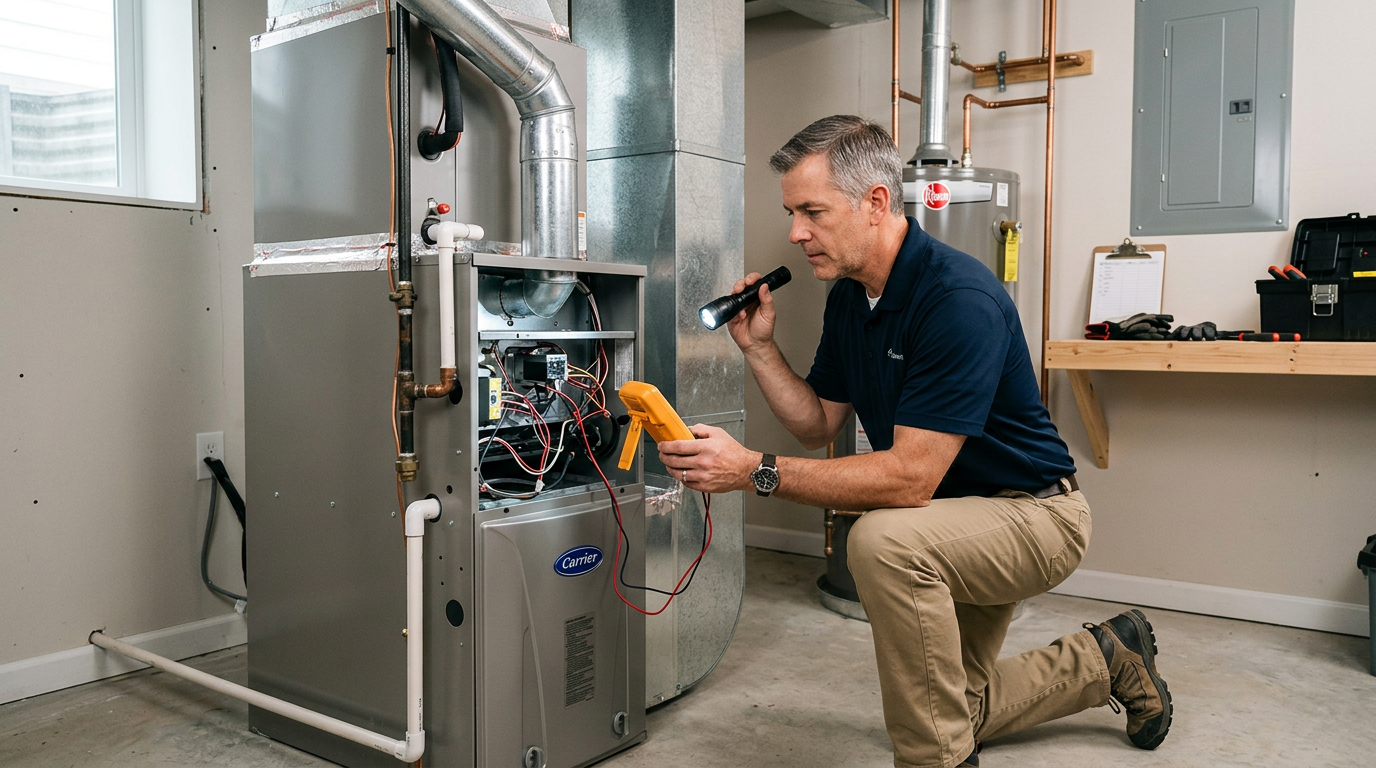
A thorough inspection of a heating system installation goes far beyond simply checking if the unit turns on. It’s a critical evaluation of safety, efficiency, and longevity, ensuring the system was installed correctly and operates as intended. For prospective buyers, it reveals potential hidden costs and safety hazards. For sellers, addressing issues proactively can streamline the sales process. And for current homeowners, it’s an essential check on one of your home’s most vital systems.
What a Home Inspector Checks During a Heating System Installation Review
During a heating system installation inspection, a qualified home inspector systematically evaluates various components to identify deficiencies, safety concerns, and potential operational issues. This is not a diagnostic service but an objective visual and operational assessment. Here’s a breakdown of what we typically examine:
System Type and General Condition
- Identification: We identify the type of heating system (e.g., forced-air furnace, boiler, heat pump, radiant system) and its fuel source (natural gas, propane, oil, electric).
- Age and Capacity: While not always precisely determinable without documentation, we note the apparent age and general size of the unit.
- Overall Appearance: We look for signs of significant rust, corrosion, physical damage, or previous repairs that might indicate underlying issues.
Installation Quality and Clearances
- Proper Clearances: A critical safety check involves verifying adequate clearances to combustible materials around the furnace, boiler, or water heater flue pipes. Insufficient clearance is a significant fire hazard.
- Secure Mounting: The unit should be securely mounted and level, preventing undue stress on connections and components.
- Accessibility: Ensure the unit and its components (filters, burner, electrical disconnect) are readily accessible for maintenance and service.
Ductwork, Piping, and Distribution Systems
- Ductwork Integrity (Forced Air): We inspect the visible ductwork for proper sealing at joints, insulation (especially in unconditioned spaces like attics or crawlspaces), and signs of damage or disconnections. Leaky ducts can significantly reduce efficiency.
- Piping Integrity (Boilers/Hydronic Systems): We check for leaks, proper insulation, secure supports, and the condition of valves and circulator pumps.
- Registers/Radiators: We visually inspect registers and radiators for proper installation and obstruction.
Ventilation and Flue Systems (Combustion Appliances)
- Flue Pipe Condition: For gas or oil furnaces/boilers, the flue pipe (chimney connector) is inspected for proper slope, secure connections, corrosion, and absence of holes or blockages.
- Vent Termination: We check that the flue terminates correctly outside the home, away from windows and other openings, and is free from obstructions.
- Draft Test: While not always possible to perform a full combustion analysis, inspectors often check for proper draft at the draft hood or barometric damper to ensure combustion byproducts are safely exiting the home, preventing dangerous carbon monoxide buildup.
- Combustion Air Supply: Adequate combustion air is essential for safe and efficient operation. We look for dedicated combustion air ducts or sufficient general ventilation, especially in confined spaces.
Fuel Supply and Electrical Connections
- Gas Lines: We inspect gas lines for proper sizing, secure connections, the presence of a drip leg (sediment trap), and an accessible shut-off valve. We may use a gas leak detector near connections. Flexible connectors should be appropriate for the appliance and not excessively long or kinked.
- Oil Lines: For oil systems, we check the condition of the oil lines, filters, and storage tank (if visible).
- Electrical Wiring: All electrical connections are inspected for proper gauge wiring, secure terminations, and the presence of a dedicated circuit breaker in the electrical service panel. We ensure the unit is properly grounded and that there’s an accessible electrical disconnect switch near the unit.
Thermostat and Safety Controls
- Thermostat Operation: We test the thermostat for basic functionality (turning the system on and off) and proper location (not near heat sources or drafts).
- Safety Devices: While not disassembled, we note the presence and apparent condition of critical safety controls such as high-limit switches (prevent overheating), rollout switches (detect flame rollout), and pressure relief valves (for boilers).
- Condensate Management: For high-efficiency furnaces and heat pumps, we inspect the condensate drain line for proper slope, absence of blockages, and connection to an appropriate drain. A functional condensate pump may also be present.
Common Defects and Red Flags in Heating System Installations
Identifying these issues early can save significant repair costs and ensure safety:
- Improper Venting: This is a major safety concern. Signs include corrosion on the flue pipe, improper slope (should rise towards the chimney), loose connections, or termination too close to windows or intake vents. This can lead to backdrafting and carbon monoxide poisoning.
- Gas Leaks: A distinct sulfur-like odor (rotten eggs) is the most obvious sign. Inspectors use electronic gas sniffers to detect leaks at connections.
- Inadequate Combustion Air: If a fuel-burning appliance doesn’t get enough fresh air, it can produce carbon monoxide and operate inefficiently. This is common in tightly sealed homes or units in small closets without proper ventilation.
- Missing or Improper Clearances to Combustibles: Wood framing, insulation, or other flammable materials too close to the furnace, boiler, or flue pipe are fire hazards.
- Damaged or Unsealed Ductwork: Gaps, tears, or disconnected sections in ductwork (especially in attics or crawlspaces) lead to significant energy loss and uneven heating.
- Incorrect Electrical Wiring: Undersized wiring, missing grounding, or lack of a dedicated circuit can pose fire and shock hazards.
- Non-Functional Safety Controls: While not always testable by a home inspector, any visible damage or signs of tampering with high-limit or rollout switches are red flags.
- Water Leaks: For boilers, leaks around pipes, valves, or the unit itself indicate potential system failure. For furnaces, condensate leaks can cause moisture intrusion and mold growth.
- Excessive Rust or Corrosion: Indicates prolonged exposure to moisture, often from leaks or condensation, which can compromise the unit’s integrity.
- Improperly Sized System: An undersized system may run constantly and struggle to heat the home, while an oversized system can short-cycle, leading to premature wear and inefficiency. This is often a specialist determination but can be flagged by operational observations.
Common Homeowner Mistakes That Obstruct Inspections
To ensure a comprehensive heating system inspection, avoid these common pitfalls:
- Blocked Access: Ensure the furnace, boiler, thermostat, electrical disconnect, and fuel shut-off valves are easily accessible. Do not stack boxes, furniture, or other items in front of or around the unit.
- Utilities Turned Off: The heating system cannot be fully tested if the gas, oil, or electricity supply is off. Ensure all utilities are active.
- Dirty Filters: While not an obstruction, a heavily clogged filter can impede airflow and prevent the system from operating optimally during testing, potentially leading to misinterpretations of performance.
- Pets Left Loose: For the safety of the inspector and your pets, please secure all animals during the inspection.
- Missing Documentation: While not mandatory, having service records or installation manuals available can provide valuable context to the inspector.
Repair Cost vs. Benefit & Negotiation Implications
Addressing heating system issues before an inspection, especially for sellers, can significantly improve the property’s presentation and reduce friction in negotiations. A well-maintained and properly installed heating system is a major selling point, signaling to buyers that the home has been cared for.
When defects are found, buyers typically request repairs, credits, or price reductions. Proactive repairs, particularly for safety-related items like proper venting or gas leaks, demonstrate good faith and can prevent these issues from becoming major negotiation points. While we cannot guarantee specific negotiation outcomes, a transparent and professional approach to addressing findings based on a fair evaluation of their impact on safety, function, and longevity is always recommended.
Consider the long-term benefits: a safe, efficient heating system not only enhances comfort but also reduces utility bills and potential future emergency repair costs. The U.S. Department of Energy provides valuable resources on energy efficiency, highlighting the long-term savings from a properly functioning HVAC system.
Repair & Specialist Guidance
When an inspection identifies issues with a heating system installation, it’s crucial to consult the appropriate licensed professional:
- HVAC Technician: For most heating system repairs, maintenance, and performance issues (e.g., airflow problems, strange noises, system not heating effectively, thermostat issues, condensate drain problems). They are experts in diagnosing and repairing furnaces, boilers, and heat pumps.
- Licensed Plumber: If issues involve gas lines (leaks, improper installation of drip legs, shut-off valves) or the hydronic piping of a boiler system (leaks, pressure issues).
- Licensed Electrician: For any electrical wiring concerns related to the heating system, including undersized circuits, improper grounding, faulty disconnects, or issues within the electrical service panel that affect the heater.
- Chimney Sweep/Ventilation Specialist: For complex flue or chimney issues, especially those involving blockages, structural damage, or concerns about proper draft.
Always obtain multiple quotes from qualified, licensed professionals. They can provide a detailed diagnosis and recommend the most effective and safe repair solutions.
Printable Home Inspection Checklist: Heating System Installation
Use this checklist to prepare for your inspection or to conduct your own preliminary assessment:
- Clear Access: Ensure the heating unit, thermostat, electrical disconnect, and fuel shut-off valves are completely unobstructed.
- Utilities On: Confirm that gas, electricity, and any other necessary utilities are active and available for testing.
- Clean Filter: Replace or clean the air filter if it’s dirty to allow for accurate operational testing.
- Check for Odors: Note any unusual smells, especially a sulfur-like odor (rotten eggs) near gas appliances, which could indicate a gas leak.
- Visual Inspection (Exterior): Look for obvious signs of damage, rust, corrosion, or leaks around the unit and its visible piping/ductwork.
- Flue Pipe Check: Visually inspect the flue pipe for secure connections, proper slope, and any signs of damage or corrosion.
- Thermostat Test: Briefly test the thermostat to ensure it turns the system on and off.
- Listen for Unusual Noises: Pay attention to any loud bangs, grinding, or squealing sounds during operation.
- Review Service Records: Gather any recent maintenance or installation records to provide to the inspector.
- Secure Pets: Ensure all pets are safely secured or removed from the property during the inspection.
Frequently Asked Questions About Heating System Installation Inspections
Q1: Can a home inspector tell me if my heating system is up to code?
A home inspector’s role is to observe and report on the visible condition of the home’s systems and components at the time of inspection, identifying significant deficiencies or safety concerns. While inspectors are knowledgeable about common building practices and safety standards, they do not enforce local building codes. If a deficiency is noted that appears to violate current safety or installation standards, the inspector will recommend further evaluation by a qualified specialist who can assess code compliance.
Q2: How long should a heating system last?
The lifespan of a heating system varies significantly by type and maintenance. Furnaces typically last 15-20 years, boilers 20-30 years, and heat pumps 10-15 years. Regular professional maintenance can extend these lifespans, while poor installation or neglect can shorten them considerably.
Q3: What’s the most common problem found during a heating system inspection?
One of the most frequent and critical issues found is improper or unsafe venting of combustion byproducts. This can include corroded flue pipes, inadequate slope, loose connections, or improper termination, all of which pose a carbon monoxide risk. Another common issue is neglected maintenance, evidenced by dirty filters, lack of service records, or visible wear and tear.
Q4: Should I have my heating system serviced before a home inspection?
Yes, it is highly recommended, especially for sellers. A pre-inspection service can identify and rectify minor issues, ensure the system is operating efficiently, and provide a clean bill of health or recent service records to present to prospective buyers. This proactive approach can prevent minor issues from becoming major negotiation points.
Q5: What is a ‘drip leg’ on a gas line, and why is it important?
A drip leg (also known as a sediment trap) is a short vertical pipe section installed at the bottom of a gas line connection to an appliance. Its purpose is to collect any sediment, debris, or moisture that might be present in the gas supply, preventing it from entering and potentially damaging the appliance’s gas valve or burner. Its absence or improper installation is a common deficiency noted by inspectors and should be corrected by a licensed plumber.
Official Reference: For additional context, consult InterNACHI home inspection guidance.