When considering a home purchase or preparing your property for sale, the condition of the irrigation or sprinkler system often receives less attention than major components like the roof or HVAC. However, a properly functioning sprinkler system is crucial for maintaining landscaping, preventing water waste, and avoiding potential damage to your home’s foundation due to improper grading and drainage. A professional home inspection will assess the visible and readily accessible components of the sprinkler system to identify deficiencies that may require repair, ensuring your investment in outdoor aesthetics doesn’t become a source of costly problems. Complete Guide to the ‘Rule of the Right Hand’ and ‘Maypole’ in Home Inspection Complete Guide to Heating System Installation Inspections Complete Guide to how to clean houseAdd tag
What a Home Inspector Checks in Your Sprinkler System
A home inspector’s evaluation of a sprinkler system is primarily visual and functional, focusing on readily accessible components and their operational status at the time of inspection. It’s important to understand that a home inspection is not a technically exhaustive irrigation system audit but rather a general overview to identify significant defects. The inspector will typically observe:
Main Shut-off Valve and Water Source
The inspector will locate and verify the accessibility of the main shut-off valve for the irrigation system. This valve is critical for isolating the system for repairs or winterization. Its functionality (whether it turns freely and completely) will be noted if tested. The water source, whether municipal or well, and its connection to the irrigation system are also observed.
Backflow Prevention Device
A critical component for public health, the backflow prevention device prevents irrigation water from siphoning back into the potable (drinking) water supply. Inspectors will look for its presence, proper installation (e.g., adequate air gap for atmospheric vacuum breakers or proper height for pressure vacuum breakers), and any visible signs of leakage or damage. Many local building codes mandate these devices, and their absence or improper installation is a significant red flag requiring immediate attention from a licensed plumber or irrigation specialist.
Controller/Timer Unit
The irrigation controller, often located in the garage, utility room, or outdoors, manages the watering schedule. The inspector will verify its power supply, basic functionality (e.g., turning on and off, cycling through zones if possible), and check for any error messages or obvious damage. The inspector will not typically program the unit or assess its advanced features.
Zone Valves and Manifolds
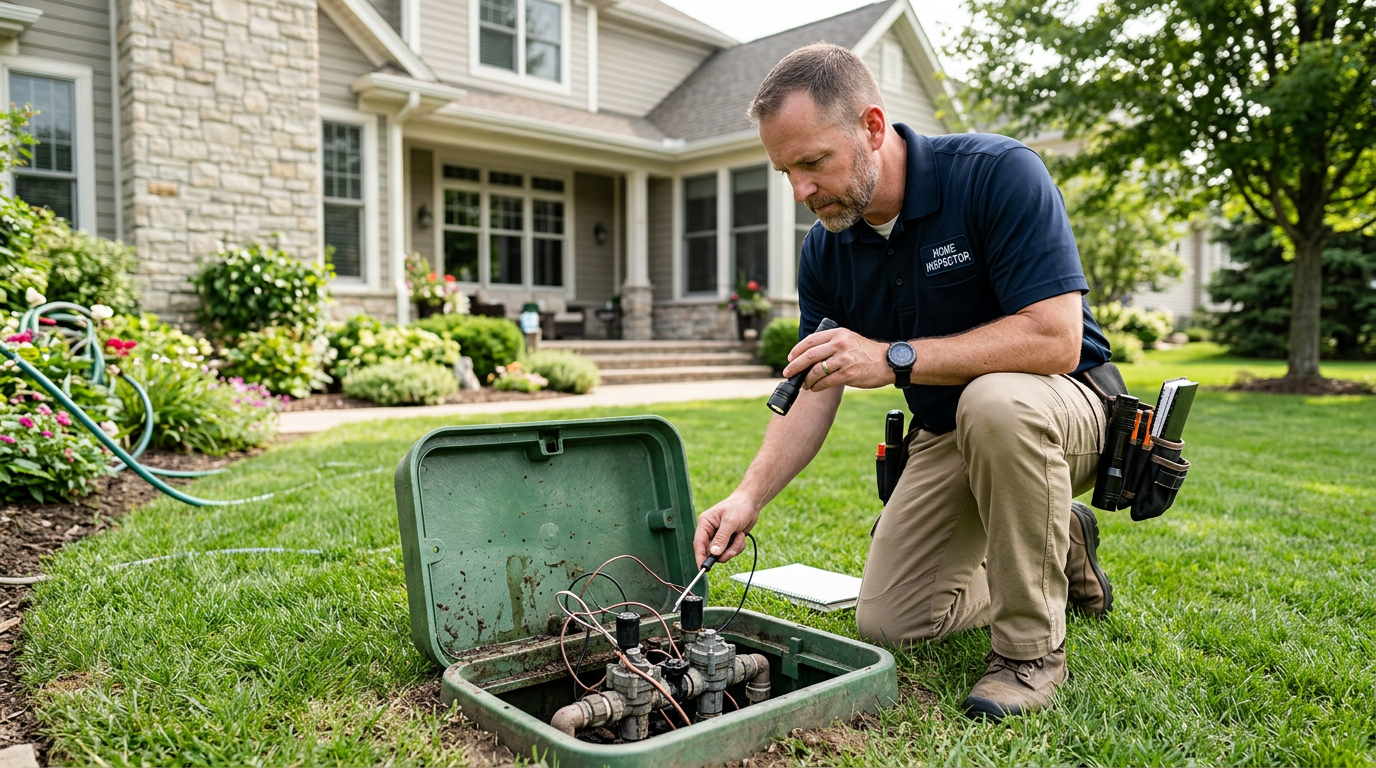
These components, often buried in valve boxes, direct water to specific zones of the landscape. The inspector will look for visible valve boxes, signs of water pooling around them (indicating leaks), and ensure they are accessible. If the system is activated, the inspector will observe if each zone turns on and off as expected, noting any zones that fail to activate or continuously run.
Distribution Lines (Visible Portions)
While underground lines are beyond the scope of a visual home inspection, the inspector will examine any visible sections of irrigation piping for leaks, damage from landscaping equipment, or improper installation. Signs of erosion or unusually lush spots in the lawn can sometimes indicate an underground leak.
Sprinkler Heads and Emitters
This is where many common issues are found. The inspector will observe the type, condition, and operation of sprinkler heads and drip emitters. They will look for:
- Damage: Broken, cracked, or missing heads.
- Clogging: Heads that spray erratically or not at all.
- Improper Height/Coverage: Heads that are too low (obstructed by grass) or too high (prone to damage), leading to uneven watering or overspray onto structures, fences, or paved areas. Overspray can contribute to moisture intrusion issues on exterior walls or accelerate deterioration of building materials.
- Leaks: Water pooling around heads when the system is off, or excessive bubbling during operation.
Water Pressure and Coverage
During operation, the inspector will observe the water pressure. Too low pressure can result in misting or insufficient coverage, while excessively high pressure can lead to broken heads or inefficient watering. The overall coverage pattern will be noted, looking for dry spots or areas receiving too much water, which can impact the health of the landscape and potentially affect grading and drainage around the foundation.
Common Defects and Red Flags in Sprinkler Systems
Identifying these issues during an inspection can save homeowners significant repair costs and water waste:
- Leaking Components: Any visible leak from the backflow preventer, main line, zone valves, or sprinkler heads is a direct indication of needed sprinkler system repair. Leaks not only waste water but can also lead to localized erosion, create trip hazards, and potentially contribute to moisture intrusion near the foundation if close to the house.
- Non-Functional Zones or Heads: If a zone fails to activate or individual heads do not spray, it indicates a problem with the controller, valve, or a break in the line.
- Improper Backflow Prevention: Absence of a device, incorrect installation, or visible leaks from it are serious health and safety concerns. This often requires immediate attention from a licensed plumber.
- Overspray: Water consistently hitting the house, driveway, or sidewalk is inefficient and can cause staining, accelerate material degradation, and contribute to moisture issues on exterior surfaces.
- Poor Coverage: Noticeable dry spots or areas of excessive saturation suggest the system is not designed or maintained correctly. This can lead to unhealthy landscaping and increased water bills.
- Damaged Wiring: Exposed or damaged low-voltage wiring to the zone valves can cause system malfunctions.
- Lack of Winterization (in cold climates): While not directly inspectable in warmer months, evidence of past freeze damage (e.g., cracked PVC components) suggests improper winterization, which will lead to future sprinkler system repair needs.
- Controller Malfunctions: A controller that won’t power on, has a blank display, or fails to execute commands indicates a need for repair or replacement.
Common Homeowner Mistakes That Obstruct or Limit Inspection
To ensure a thorough inspection of your sprinkler system, avoid these common pitfalls:
- System Turned Off/Winterized: If the inspection is scheduled during a season when the system is typically off or winterized, the inspector cannot functionally test it. If possible, have the system activated and ready for operation.
- Lack of Access: Ensure the main shut-off valve, backflow preventer, and controller are easily accessible. Don’t block them with storage, landscaping, or debris.
- Obscured Sprinkler Heads/Valve Boxes: Overgrown grass, mulch, or landscaping can hide sprinkler heads and valve boxes, preventing proper assessment of their condition and coverage. Trim vegetation before the inspection.
- Unaware of System Operation: If you’re selling, know how to operate your system or provide instructions. If you’re buying, ask the seller for any operational manuals.
- Pets Left Loose: While not directly related to the system’s function, loose pets can hinder the inspector’s ability to safely and thoroughly walk the property and test the system.
Repair Cost vs. Benefit & Negotiation Implications
Addressing visible sprinkler system repair needs before a home inspection can significantly improve the property’s presentation and reduce potential buyer concerns. Simple fixes like replacing broken sprinkler heads or adjusting coverage patterns are relatively inexpensive but demonstrate proactive maintenance. Leaving obvious defects unaddressed can lead to buyers requesting credits or price reductions, often at a higher perceived cost than the actual repair.
For instance, a few broken heads might cost $50-$150 to replace, but a buyer might use this as leverage for a $500 credit. More significant issues, such as a faulty backflow preventer or a major line leak, can be more costly. A professional assessment and repair prior to listing can provide peace of mind and a smoother transaction. While a home inspector identifies issues, they do not provide repair estimates. Any findings should be evaluated fairly and professionally by qualified contractors.
Repair & Specialist Guidance
Many minor sprinkler system repair tasks can be handled by a handy homeowner, such as replacing a broken sprinkler head or adjusting its spray pattern. However, for more complex issues, professional intervention is essential:
- Licensed Plumber or Irrigation Specialist: Always consult a licensed professional for issues involving the backflow prevention device, main line leaks, significant pressure problems, or if the system is connected to a well. Backflow preventers often require annual testing by certified professionals in many jurisdictions.
- Electrical Issues: If the controller is completely dead or zones are not activating due to suspected electrical faults (e.g., damaged wiring to the valves), an irrigation specialist or a licensed electrician may be needed.
- System Design/Efficiency: For persistent coverage issues, high water bills, or a desire to upgrade to a more efficient system (e.g., drip irrigation), an irrigation specialist can provide expert design and installation services.
Ignoring sprinkler system repair needs can lead to escalating costs, water waste, and potential damage to your landscape and home. Regular maintenance and timely repairs are key.
InterNACHI Home Inspection Checklist: Sprinkler System Evaluation
This actionable checklist helps homeowners prepare for and understand the sprinkler system portion of a home inspection:
- Pre-Inspection Preparation:
- ✓ Ensure the sprinkler system is active and operational, especially if the inspection is outside the typical watering season.
- ✓ Locate and ensure clear access to the main irrigation shut-off valve.
- ✓ Locate and ensure clear access to the backflow prevention device.
- ✓ Locate and ensure clear access to the irrigation controller/timer.
- ✓ Trim any overgrown grass, shrubs, or landscaping that might obscure sprinkler heads or valve boxes.
- ✓ If you know of any non-functional zones or heads, make a note for the inspector.
- ✓ Secure any pets that might interfere with the outdoor portion of the inspection.
- During the Inspection:
- ✓ Be available to answer questions about the system’s history or operation.
- ✓ Observe the inspector’s findings regarding leaks, damage, or operational issues.
- Post-Inspection Actions:
- ✓ Review the inspection report carefully for any noted sprinkler system deficiencies.
- ✓ Prioritize sprinkler system repair needs based on safety (e.g., backflow issues) and potential for property damage (e.g., major leaks near foundation).
- ✓ Obtain quotes from licensed irrigation specialists or plumbers for significant repairs.
- ✓ Consider annual professional maintenance, including backflow testing, to prevent future issues.
- ✓ Adjust watering schedules and head positions as needed to ensure efficient coverage and prevent overspray.
Frequently Asked Questions About Sprinkler System Inspections and Repair
Q1: Is a sprinkler system inspection included in a standard home inspection?
A1: Yes, a visual and functional assessment of the readily accessible components of the sprinkler system is typically included in a standard home inspection, provided the system is operational at the time of inspection. However, it is not a comprehensive irrigation audit.
Q2: What if the sprinkler system is winterized during the inspection?
A2: If the system is winterized, the inspector will note that it could not be functionally tested. It is highly recommended to have the system de-winterized and activated for the inspection, or to arrange for a separate inspection by an irrigation specialist once it’s operational.
Q3: How often should I have my backflow prevention device tested?
A3: Many municipalities require annual testing of backflow prevention devices by a certified professional to ensure they are functioning correctly and protecting the public water supply. Check with your local water authority for specific requirements.
Q4: Can a leaking sprinkler head cause damage to my home’s foundation?
A4: Yes, persistent leaks or overspray near the foundation can contribute to excessive soil saturation, potentially leading to foundation movement, moisture intrusion into the crawlspace or basement, and even pest attraction. Proper grading and drainage are critical to divert water away from the structure.
Q5: What’s the difference between a home inspector’s review and an irrigation specialist’s audit?
A5: A home inspector provides a general overview of the system’s visible condition and basic functionality. An irrigation specialist performs a detailed audit, which includes assessing water pressure at each head, optimizing nozzle selection, checking for uniformity of coverage, performing flow tests, and often providing a detailed water budget and efficiency recommendations. If the home inspection reveals significant issues, an irrigation specialist’s audit is the next logical step.
Official Reference: For additional context, consult InterNACHI home inspection guidance.
Official Reference: For additional context, consult ASHI inspection standards and guidance.