Roaches are a significant red flag during a home inspection, often indicating underlying issues like sanitation problems, moisture intrusion, or structural deficiencies. For a home inspector, evidence of roach activity isn’t just about pest control; it’s a critical indicator of environmental conditions within the home that may require further investigation and remediation. Understanding these signs and their implications is crucial for prospective buyers, sellers, and homeowners alike. Complete Guide to How to Get Rid of Roaches: An Inspector’s Perspective on Infestation, Moisture, and Home Health Complete Guide to How to Get Rid of Gnats in the House: An Inspector’s Perspective on Moisture, Siding, and Home Health Complete Guide to How to Get Rid of Ants in the House: An Inspector’s Perspective on Siding and Moisture Management Complete Guide to how to clean houseAdd tag
What a Home Inspector Looks For: Beyond the Visible Roach
A professional home inspector doesn’t just look for live roaches scurrying across the floor. Our evaluation is comprehensive, focusing on both direct evidence of infestation and the environmental factors that create a hospitable environment for these pests. We approach this with the objective eye of an investigator, seeking patterns and root causes.
Direct Evidence of Roach Activity
- Visible Roaches (Live or Dead): While live roaches are an obvious sign, even dead roaches can indicate a past or current problem, especially if found in hidden areas.
- Fecal Matter (Droppings/Frass): Often resembling coffee grounds, black pepper, or dark smears, these are typically found in areas of high activity, such as inside cabinets, drawers, behind appliances, or along baseboards.
- Egg Casings (Oothecae): These small, capsule-like cases contain multiple eggs and are a definitive sign of breeding. They can be found glued to surfaces in secluded, protected spots.
- Shed Exoskeletons: Roaches shed their outer shells as they grow. Finding these indicates a thriving population.
- Odor: A distinct, musty, or oily odor, particularly in severe infestations, can be detectable in enclosed spaces like pantries or cabinets.
Conducive Conditions and Harborage Points
An inspector also meticulously examines areas where roaches seek shelter, food, and moisture. These are often the same areas prone to other home defects:
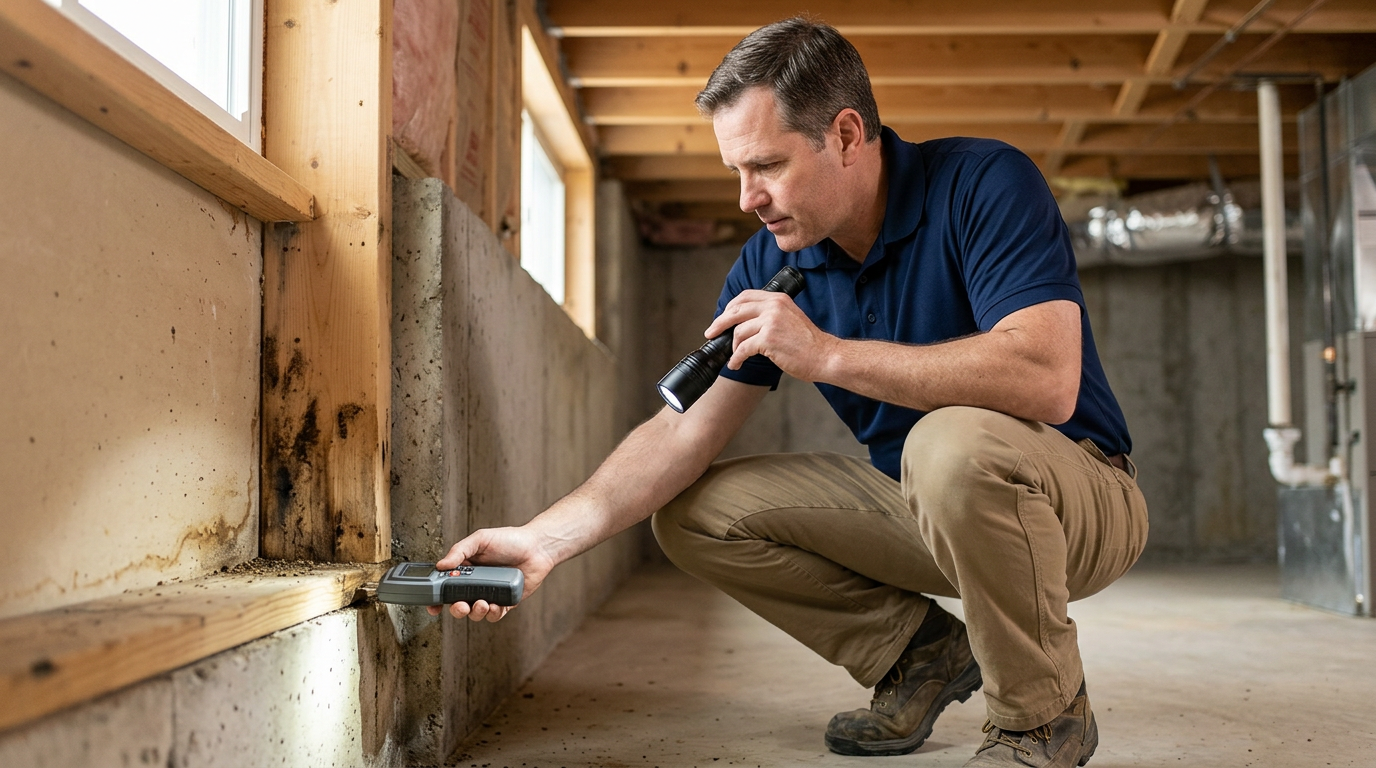
- Kitchen and Bathroom Areas: Under sinks, behind dishwashers, refrigerators, stoves, and in pantry cabinets are prime locations due to food debris, warmth, and potential plumbing leaks. We use tools like moisture meters to detect hidden moisture intrusion that might attract pests.
- Crawlspaces and Basements: These dark, often damp environments are ideal breeding grounds. We look for signs of moisture, standing water, or poor ventilation that contribute to high humidity.
- Electrical Service Panels and Outlets: Roaches are attracted to the warmth and shelter provided by electrical components. Evidence here can indicate a deeper infestation within wall voids.
- Attic Spaces: While less common for primary harborage, attics can provide access points and shelter, especially if there are roof leaks or poor ventilation affecting attic insulation.
- Utility Penetrations: Gaps around pipes, wires, and ducts entering the home from the exterior or between rooms offer easy access.
- Exterior Foundation and Siding: Cracks in the foundation, gaps in siding, or poorly sealed utility entry points can serve as direct entryways into the home. Poor grading and drainage around the foundation can lead to moisture accumulation, further inviting pests.
Common Defects & Red Flags Associated with Roaches
The presence of roaches is rarely an isolated issue. It often points to deeper problems within the home’s structure or maintenance. Here are common red flags and what they may indicate:
- Active, Widespread Infestation: Suggests a long-standing problem, potentially indicating significant sanitation issues, neglected moisture problems, or a lack of effective pest management.
- Evidence Near Plumbing: Fecal matter or live roaches around plumbing shutoffs, under sinks, or near water heaters strongly suggest a moisture source, such as a slow leak.
- Evidence in Electrical Panels: Roaches inside an electrical service panel are a serious concern, as they can cause shorts or damage, in addition to indicating a harborage point.
- Heavy Staining/Odor: Extensive fecal staining or a strong roach odor points to a severe, long-term infestation that will require extensive cleaning and professional treatment.
- Conducive Exterior Conditions: Overgrown vegetation against the house, debris piles, or standing water near the foundation can provide outdoor harborage and easy access indoors. Issues with roof flashing or gutters can lead to moisture that attracts pests.
Common Homeowner Mistakes That Obstruct or Limit an Inspection
For sellers, preparing your home for an inspection is crucial. Certain oversights can hinder an inspector’s ability to thoroughly evaluate for pests and related issues, potentially leading to more questions and concerns for buyers.
- Clutter and Obstructions: Boxes, furniture, or excessive storage blocking access to crawlspace entries, attic hatches, electrical service panels, plumbing access points (under sinks), or behind major appliances (refrigerator, stove, dishwasher) can prevent a thorough examination.
- Unaddressed Leaks: Ignoring known plumbing leaks, even minor drips, creates ideal moisture conditions for roaches and can be easily detected by an inspector.
- Poor Sanitation: Leaving food debris, dirty dishes, or overflowing trash cans can attract pests and make an infestation appear worse than it might be.
- Sealing Evidence: Attempting to paint over or patch areas with heavy roach droppings without remediation is often obvious to a trained eye and can raise suspicions about undisclosed issues.
- Blocked Exterior Access: Overgrown bushes or debris against the foundation can prevent inspection of potential entry points and grading.
Repair Cost vs. Benefit & Negotiation Implications
Addressing pest issues and their underlying causes before an inspection can significantly improve a property’s presentation and reduce potential negotiation points. While an inspector cannot provide specific repair costs, we can identify the scope of the problem and recommend specialist intervention.
- Proactive Remediation: Cleaning, sealing minor cracks, and fixing obvious leaks (e.g., a dripping faucet or a leaky pipe under the sink) before the inspection can prevent roach activity and demonstrate good home maintenance. This can reduce the likelihood of pest-related repair requests or price concessions.
- Undisclosed Infestations: If an inspector discovers a significant, undisclosed roach infestation, it can lead to substantial negotiation for pest control services, repairs to moisture-damaged areas, and potentially a reduction in the sale price. Buyers may also request further specialized inspections, adding delays and costs.
- Fair Evaluation: It’s important for all parties to evaluate findings fairly. A minor, localized issue might require simple DIY solutions, while a widespread problem warrants professional intervention. The inspector’s role is to report the facts, allowing buyers and sellers to negotiate based on objective information.
Repair & Specialist Guidance
When roach activity or conducive conditions are identified, specific professionals should be consulted:
- Licensed Pest Control Professional: For any active infestation, a pest control expert is essential for effective treatment and ongoing management. They can identify the species, determine the extent of the infestation, and recommend targeted solutions.
- Licensed Plumber: If moisture intrusion from plumbing leaks is identified (e.g., under sinks, around toilets, near water heaters), a plumber is needed to repair the source of the leak and prevent future issues.
- General Contractor/Handyman: For sealing cracks and gaps in walls, foundations, or around utility penetrations. They can also address issues with grading and drainage around the home’s exterior to divert water away from the foundation.
- Roofer: If attic moisture or leaks are suspected due to issues with roof flashing or damaged roofing materials, a qualified roofer should be consulted.
- HVAC Technician: If HVAC components like condensate lines or drip pans are contributing to moisture issues, an HVAC specialist can diagnose and repair the system.
- Homeowner: For routine cleaning, reducing clutter, and maintaining good sanitation practices, which are crucial for preventing re-infestation.
Printable Home Inspection Checklist: Preparing for a Pest-Free Evaluation
Use this actionable checklist to prepare your home and ensure a thorough inspection, minimizing the chances of pest-related red flags:
- Clean Thoroughly: Wipe down all kitchen surfaces, clean out food crumbs from cabinets and drawers, and empty trash cans.
- Address Moisture: Fix any dripping faucets, leaky pipes, or signs of moisture under sinks, around toilets, and near appliances. Ensure HVAC condensate lines are draining properly.
- Clear Access: Ensure all areas are accessible, including crawlspace entries, attic hatches, electrical service panels, and the areas behind major appliances (refrigerator, stove, dishwasher, washing machine, dryer).
- Seal Entry Points: Seal any visible cracks or gaps around utility lines, baseboards, and windows/doors.
- Manage Exterior: Trim back vegetation from the house, remove debris piles, and ensure gutters are clean and downspouts direct water away from the foundation.
- Store Food Properly: Keep all food, including pet food, in sealed containers.
- Remove Clutter: Reduce clutter in storage areas, especially in basements, garages, and utility closets, to eliminate potential harborage sites.
Frequently Asked Questions About Roaches and Home Inspections
Q1: Will a home inspector automatically find all roaches?
A home inspector will diligently look for signs of roach activity and conducive conditions within the scope of a visual, non-invasive inspection. While they are highly trained to spot evidence, they cannot guarantee finding every single pest, especially if they are hidden deep within walls or if the infestation is very minor or recent. The goal is to identify significant issues and red flags.
Q2: What if an inspector finds roaches? Does that mean I shouldn’t buy the house?
Not necessarily. The discovery of roaches means further investigation is warranted. The inspector will report the findings, and you should then consult with a licensed pest control professional for a detailed assessment and treatment plan. The severity of the infestation and the underlying causes (e.g., a simple leak vs. widespread structural moisture damage) will determine the appropriate next steps and negotiation strategy.
Q3: Can roaches cause damage to a home’s structure?
While roaches themselves don’t typically cause structural damage like termites, their presence often indicates underlying moisture issues that *can* lead to structural problems over time. Additionally, severe infestations can contaminate food, surfaces, and even electrical components, potentially causing shorts in electrical service panels or appliances.
Q4: How can I prevent roaches after moving into a new home?
Prevention is key. Maintain excellent sanitation, seal all food in airtight containers, regularly empty trash, and promptly clean up spills. Address any moisture issues immediately, such as leaky faucets or pipes. Seal cracks and crevices in walls, floors, and around utility penetrations. Reduce clutter, especially in dark, damp areas like basements and crawlspaces. Regular professional pest control can also be a proactive measure.
Q5: Is a roach infestation considered a major defect in a home inspection?
The classification of a ‘major defect’ can vary, but a significant, active roach infestation is generally considered a serious concern. It impacts health, sanitation, and often points to other underlying issues like moisture intrusion or poor maintenance. It will almost certainly be highlighted in the inspection report and will likely require professional remediation and follow-up.
Official Reference: For additional context, consult InterNACHI home inspection guidance.
Official Reference: For additional context, consult ASHI inspection standards and guidance.