While the phrase ‘how to clean windows’ often refers to a routine maintenance task, in the context of a professional home inspection, the cleanliness and overall condition of windows are crucial indicators of a home’s maintenance history and potential underlying issues. A home inspector doesn’t clean your windows, but they meticulously examine them for defects that cleaning might reveal, or that a lack of proper maintenance (including cleaning) might exacerbate. This guide will provide an expert-level understanding of what a comprehensive window inspection entails, moving far beyond surface-level observations to uncover practical implications for homeowners, buyers, and sellers.
The Inspector’s Lens: What a Professional Home Inspection of Windows Entails
Windows are more than just panes of glass; they are complex assemblies designed to provide light, ventilation, views, and protection from the elements. A professional home inspector evaluates windows not just for aesthetic appeal, but for their functional integrity, safety, and contribution to the home’s overall performance. This involves a systematic examination of all accessible windows, both interior and exterior.
Key Areas of Window Inspection:
- Operational Assessment: Each window is typically operated to ensure it opens, closes, and locks properly. This includes checking sashes for ease of movement, verifying that locks engage securely, and assessing the functionality of cranks, latches, and balance mechanisms. Inoperable windows can be a safety hazard, especially if they are designated as emergency escape and rescue openings (egress windows) in bedrooms or basements.
- Glazing Integrity: The glass itself is inspected for cracks, chips, or signs of impact damage. For insulated glass units (IGUs), which are common in modern homes, inspectors look for ‘fogging’ or condensation between the panes, which indicates a failed seal. This compromises the window’s energy efficiency and can lead to moisture accumulation within the unit.
- Frame and Sash Condition: The material of the window frame (wood, vinyl, aluminum, fiberglass) dictates specific inspection points. Wood frames are scrutinized for rot, decay, insect damage, and peeling paint. Vinyl and aluminum frames are checked for cracks, warping, dents, and corrosion. The sash, which holds the glass, is also examined for similar defects.
- Weatherstripping and Sealing: The condition of weatherstripping around the sashes and the caulking around the exterior perimeter of the window frame is critical for preventing air and moisture intrusion. Deteriorated or missing seals can lead to drafts, higher energy bills, and water damage to the wall cavity.
- Sills, Headers, and Exterior Trim: The window sill (the bottom horizontal part) is a common point of water accumulation and potential rot. Inspectors check for proper slope to shed water away from the house. The header (the structural beam above the window) and the surrounding exterior trim are examined for signs of moisture damage, improper installation, or deterioration that could compromise the building envelope.
- Flashing and Drainage: Proper flashing around the window unit is essential to divert water away from the wall structure. Inspectors look for missing, damaged, or improperly installed flashing, which can lead to significant moisture intrusion. The overall grading and drainage around the home’s foundation, especially near windows, is also considered, as poor exterior drainage can contribute to window-related moisture issues.
- Safety Glazing: In certain locations, such as near doors, bathtubs, or stair landings, safety glass (tempered or laminated) is required by building codes. While an inspector cannot test for safety glass, they can note its apparent absence in areas where it’s typically mandated, recommending further evaluation by a qualified contractor.
- Screens: Screens are checked for tears, holes, proper fit, and functionality. While not a critical structural component, damaged screens compromise ventilation and insect exclusion.
Common Defects, Red Flags, and Their Implications
Identifying defects during a window inspection is crucial for understanding the home’s condition and potential future costs. Here are common red flags and what they signify:
- Fogging Between Panes (Failed IGU Seal): This is a definitive sign that the inert gas (like argon) between the panes has escaped and been replaced by moist air. It significantly reduces the window’s insulating value, leading to increased energy consumption. Repair typically involves replacing the entire sash or the insulated glass unit itself, which can be costly.
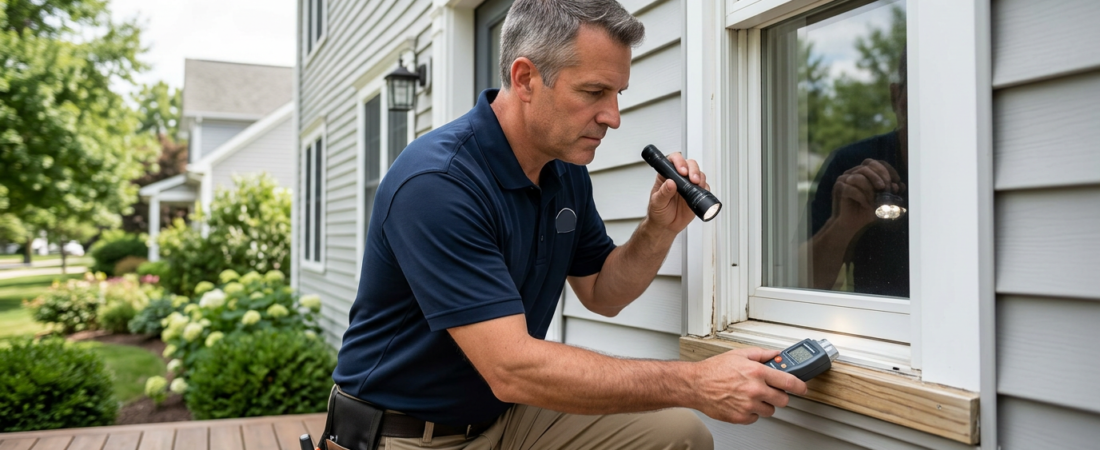
- Wood Rot or Deterioration: Often found on sills, lower frames, or exterior trim, rot indicates chronic moisture exposure. If left unaddressed, it can spread to the wall framing, attract pests, and compromise the structural integrity around the window opening. A InterNACHI home inspector may use a moisture meter to confirm elevated moisture levels in suspicious areas.
- Cracked or Broken Glass: Beyond the obvious safety hazard, compromised glazing reduces energy efficiency and security. Depending on the type of window, repair might range from simple glass replacement to full sash replacement.
- Inoperable Windows or Hardware: A window that won’t open or close, or whose locks don’t function, is a safety and security concern. For bedrooms, it can violate egress requirements, posing a significant risk in an emergency. Hardware can often be repaired or replaced, but severe issues might require professional intervention.
- Missing or Deteriorated Weatherstripping/Caulking: These are primary defenses against air and water leaks. Their failure leads to drafts, higher heating/cooling costs, and potential water damage to the interior finishes or wall structure. This is often a relatively simple and inexpensive repair, but if neglected, can lead to more severe issues.
- Water Stains Below Windows (Interior or Exterior): These are clear indicators of past or ongoing moisture intrusion. The source could be failed caulking, flashing, a compromised IGU, or even issues with the roof or exterior siding above the window. Further investigation is always warranted.
- Improper or Missing Flashing: Flashing is designed to create a waterproof barrier around the window. If it’s missing, damaged, or incorrectly installed, water can penetrate the wall cavity, leading to hidden rot, mold, and structural damage. This often requires professional remediation and re-installation.
- Lead-Based Paint: In homes built before 1978, windows (especially wood ones) are common locations for lead-based paint. Chipping or peeling paint, particularly on operable sashes, can create lead dust, posing a health hazard, especially to children. An inspector will note the presence of peeling paint but cannot test for lead; a certified lead professional should be consulted if this is a concern.
Common Homeowner Mistakes That Obstruct Window Inspection
To ensure a thorough and accurate window inspection, homeowners preparing to sell their property should avoid these common pitfalls:
- Blocked Access: Furniture, heavy drapes, blinds, or storage items placed directly in front of windows prevent the inspector from fully opening, closing, and examining the window and its components.
- Windows Painted Shut or Caulked Closed: While seemingly a quick fix for drafts, this prevents proper operation and can mask underlying issues. Inspectors need to operate windows to assess their functionality.
- Exterior Obstructions: Dense shrubbery, climbing vines, or stored items against the exterior of the house can block access to window sills, frames, and flashing, making it impossible to assess exterior conditions.
- Neglecting Minor Issues: Small cracks in caulking or minor wood rot, if ignored, can escalate into significant problems that will be flagged during an inspection. Addressing these proactively can save headaches and costs.
- Utilities Turned Off: While less common for windows, if the inspection requires checking for drafts or energy efficiency related to HVAC, having utilities on can be beneficial.
Repair Cost vs. Benefit & Negotiation Implications
Addressing window issues before an inspection can significantly improve the property’s presentation and potentially streamline the negotiation process. Minor repairs, such as re-caulking, replacing weatherstripping, or adjusting hardware, are relatively inexpensive and can prevent these items from appearing as defects in the inspection report. This demonstrates proactive home maintenance to prospective buyers.
For more significant issues, like failed IGUs, extensive wood rot, or full window replacement, the costs can be substantial. Buyers will factor these into their offers or request credits. Having a clear understanding of the condition of your windows and proactively obtaining quotes for major repairs can put you in a stronger negotiating position. It’s important to remember that an inspection report is a factual assessment of visible conditions, and findings should be evaluated fairly and professionally by all parties involved.
When to Call a Specialist: Repair & Specialist Guidance
While some window maintenance and minor repairs can be DIY projects, many issues warrant professional attention:
- DIY Maintenance: Regular window cleaning, replacing torn screens, re-caulking around exterior frames, and replacing worn weatherstripping are tasks many homeowners can handle.
- Handyman Services: For minor glass replacement (single pane), adjusting sticky sashes, or replacing simple hardware, a skilled handyman can often assist.
- Window Specialist/Contractor: This is the go-to professional for failed insulated glass units (IGU replacement), extensive wood rot on frames or sashes, full window replacement, or complex operational issues. They have the expertise and specialized tools for proper installation and repair.
- General Contractor/Carpenter: If the inspection reveals significant rot extending into the wall framing around the window, or if structural repairs are needed for the header, a general contractor or experienced carpenter should be consulted.
- Lead Abatement Professional: If lead-based paint is suspected on older windows and disturbance is necessary for repair or replacement, a certified lead abatement professional should be engaged to ensure safe handling and removal, following EPA guidelines.
- Energy Auditor: If significant drafts or energy loss are noted, an energy auditor can perform a blower door test and thermal imaging to pinpoint exact air leakage points and recommend comprehensive solutions.
Printable Home Inspection Checklist: Windows
Use this actionable checklist to assess your windows before an inspection or as part of your regular home maintenance routine.
- General Condition:
- ✓ Are all window panes free of cracks, chips, or visible damage?
- ✓ For double-pane windows, is there any fogging or condensation between the glass layers?
- ✓ Are window frames (wood, vinyl, aluminum) free of rot, cracks, warping, or significant corrosion?
- ✓ Is the exterior paint/finish on wood windows in good condition, without peeling or blistering?
- Operation & Security:
- ✓ Do all windows open, close, and lock easily and securely?
- ✓ Are cranks, latches, and balance mechanisms functioning correctly?
- ✓ For bedrooms, do windows designated as emergency escape and rescue openings open fully and easily?
- Sealing & Weatherproofing:
- ✓ Is the caulking around the exterior perimeter of each window frame intact and free of cracks or gaps?
- ✓ Is the weatherstripping around the sashes present and in good condition, without tears or compression?
- ✓ Are there any visible drafts when holding a hand near the closed window on a windy day?
- Moisture Management:
- ✓ Are window sills sloped away from the house to shed water effectively?
- ✓ Is the flashing around the exterior of the window intact and properly diverting water?
- ✓ Are there any water stains on the interior walls or trim below the windows?
- ✓ Are there any signs of mold or mildew around window frames or sills?
- Screens:
- ✓ Are all window screens present, free of tears or holes, and do they fit snugly?
- Accessibility:
- ✓ Is access to all windows (interior and exterior) clear of obstructions like furniture, drapes, or landscaping?
Frequently Asked Questions About Window Inspections
Q1: How often should windows be cleaned, and does it affect the inspection?
While there’s no strict rule, most homeowners clean windows quarterly or bi-annually. Regular cleaning helps maintain clarity and allows for early detection of issues like small cracks, failed seals (fogging), or deteriorating frames that might otherwise be obscured by dirt and grime. A clean window allows the inspector to see potential defects more clearly, contributing to a more thorough assessment.
Q2: What does fogging between window panes mean, and is it a serious defect?
Fogging between window panes indicates a failed seal in an insulated glass unit (IGU). This allows moist air to enter the space between the panes, compromising the window’s insulating properties. It is considered a defect because it reduces energy efficiency and can obscure vision. While not typically an immediate structural hazard, it will lead to higher energy bills and eventually requires replacement of the IGU or the entire sash.
Q3: Are all windows required to open for egress (emergency escape)?
No, not all windows are required to open for egress. However, all sleeping rooms (bedrooms) and basements with habitable space must have at least one operable window or door that meets specific size and height requirements for emergency escape and rescue. An inspector will note if windows in these critical areas do not meet these requirements, as it’s a significant safety concern.
Q4: How long do windows typically last, and when should I consider replacement?
The lifespan of windows varies greatly depending on the material, quality of installation, and maintenance. Vinyl windows can last 20-40 years, wood windows 15-30 years (with proper maintenance), and aluminum windows 20-30 years. Signs that replacement might be needed include persistent drafts, significant fogging in multiple IGUs, extensive rot or deterioration of frames, difficulty operating, or if you’re looking to significantly improve energy efficiency.
Q5: Can a home inspector detect lead paint on windows?
A home inspector can identify conditions that are conducive to lead paint hazards, such as chipping or peeling paint on windows in homes built before 1978. However, they cannot definitively test for the presence of lead paint. If lead paint is suspected, especially in areas where it might be disturbed (like operable window sashes), a certified lead-based paint inspector or risk assessor should be consulted for testing and recommendations.
Related Home Inspection Guide: Complete Guide to Home Inspection of Trims and Windows
Official Reference: For additional context, consult ASHI inspection standards and guidance.