Understanding the various components of a toilet and their proper function is crucial for maintaining a healthy, efficient home and for navigating any home inspection process. Far from being a simple fixture, a toilet is a complex assembly of parts, each playing a vital role in waste removal and water conservation. For homeowners, prospective buyers, and sellers, a thorough understanding of ‘toilet parts’ goes beyond mere identification; it involves recognizing signs of wear, potential defects, and the implications these can have on a property’s overall condition and value.
The Home Inspector’s Approach to Toilet Systems
During a home inspection, a qualified inspector evaluates toilets as part of the broader plumbing system. The goal is not to diagnose specific internal component failures but to identify functional defects, visible damage, and evidence of leaks that could indicate underlying issues. This evaluation adheres to industry standards, such as those set by the InterNACHI Standards of Practice or the ASHI Standards of Practice, focusing on observable conditions and operational performance.
What an Inspector Looks For: Practical Evaluation
- Functionality: Each toilet is flushed at least once to observe its flushing power, refill cycle, and whether it runs continuously. The inspector notes if the bowl empties completely and refills to the correct level.
- Stability: The toilet bowl is gently rocked to check for stability. A rocking toilet often indicates loose mounting bolts or a compromised wax ring seal, which can lead to leaks.
- Leaks: Visual inspection for water stains or active drips around the base of the toilet, the supply line connection, and the tank-to-bowl connection. A moisture meter may be used on the flooring around the toilet base to detect hidden moisture intrusion, which could indicate a failed wax ring or other leaks.
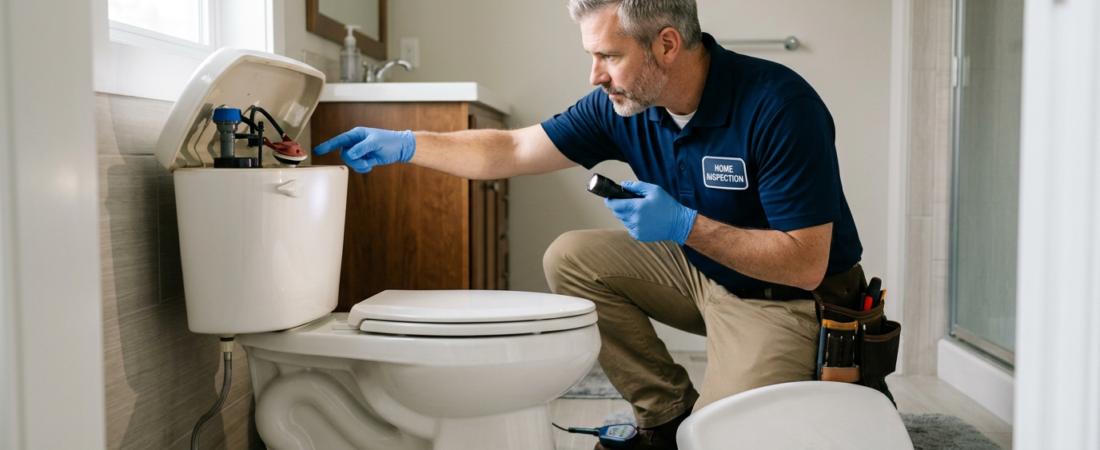
- Components: The tank lid is removed (if accessible) to observe the internal components: the fill valve (ballcock assembly), flush valve, flapper, and overflow tube. The inspector checks for visible corrosion, wear, or improper adjustment.
- Shut-off Valve: The water supply shut-off valve, typically located behind or beside the toilet, is operated to ensure it functions correctly. A seized or leaking shut-off valve is a common finding.
- Visible Damage: Cracks in the porcelain of the bowl or tank, loose or damaged toilet seats, and significant cosmetic issues are noted.
- Drainage and Venting: While not directly inspecting the vent stack, issues like slow draining or gurgling after flushing can sometimes point to partial clogs or problems with the plumbing vent system.
Key Toilet Parts and Their Inspection Significance
Understanding the function of each major toilet component helps in appreciating why certain defects are red flags.
- Fill Valve (Ballcock Assembly): This mechanism controls the water entering the tank after a flush. Modern toilets typically use float cup or float arm designs. An inspector checks for constant running (indicating a faulty fill valve or flapper), slow filling, or improper water level adjustment.
- Flush Valve and Flapper: The flush valve is the large opening at the bottom of the tank, sealed by the flapper. When the handle is pressed, the flapper lifts, allowing water to rush into the bowl. A worn or deteriorated flapper is a primary cause of ‘ghost flushing’ (toilet running intermittently without being flushed) or constant running, leading to significant water waste.
- Wax Ring/Gasket: This critical seal sits between the toilet’s base and the waste pipe flange on the floor. Its purpose is to prevent water and sewer gases from escaping. A failed wax ring is a common source of leaks at the base of the toilet, often leading to subfloor damage and potential mold growth if not addressed promptly.
- Supply Line and Shut-off Valve: The flexible or rigid line connecting the wall water supply to the toilet tank. Inspectors check for leaks at connections and ensure the shut-off valve operates freely, which is vital for emergency repairs.
- Toilet Trap: The S-shaped bend in the bowl’s porcelain, which holds standing water to create a seal against sewer gases. While not a ‘part’ in the sense of being replaceable, its integrity is crucial.
Common Defects, Red Flags, and What They Indicate
Identifying these issues early can save homeowners from costly repairs and prevent minor problems from escalating.
- Constant Running Toilet: This is a significant red flag. It typically indicates a faulty flapper, a misadjusted or defective fill valve, or an improperly seated tank lid. Beyond the annoying sound, it’s a major water waste, significantly increasing utility bills. A moisture intrusion issue could also be exacerbated by this constant flow.
- Leaks at the Base of the Toilet: Often signaled by water stains on the floor, damaged flooring, or a rocking toilet. This almost always points to a failed wax ring. If left unaddressed, it can lead to severe subfloor rot, structural damage, and mold issues in the bathroom and potentially the ceiling below.
- Leaks at the Tank-to-Bowl Connection or Supply Line: These are usually easier to spot and often involve worn gaskets, loose bolts, or corroded supply lines. While less damaging than a wax ring leak, they still contribute to water waste and potential damage.
- Rocking or Loose Toilet: Beyond indicating a potential wax ring failure, a loose toilet can stress the waste pipe connection, leading to further leaks or even pipe damage over time.
- Slow or Weak Flush: This could be due to a partial clog in the drain, insufficient water in the tank (often from a misadjusted fill valve), or issues with the plumbing vent system. A home inspector will note the symptom, but a plumber would be needed for diagnosis.
- Cracked Porcelain (Bowl or Tank): Any crack in the porcelain is a serious defect. It compromises the structural integrity of the toilet and will eventually lead to leaks, requiring full toilet replacement.
- Corroded or Deteriorated Internal Components: Visible rust on bolts, a brittle flapper, or a corroded fill valve indicate aging components that are prone to failure.
- Non-functional Shut-off Valve: If the valve cannot be turned, it means water cannot be quickly stopped in an emergency, turning a minor leak into a major flood risk.
Common Homeowner Mistakes That Obstruct or Limit Inspection
Proper preparation ensures a comprehensive inspection and avoids unnecessary re-inspections or missed findings.
- Obstructed Access: Storing cleaning supplies, laundry baskets, or decorative items directly around or behind the toilet can prevent the inspector from fully accessing the shut-off valve or observing the base for leaks.
- Ignoring Minor Leaks: Homeowners might wipe up small puddles and assume they’re minor splashes, inadvertently masking a persistent leak that could be causing hidden damage.
- Not Testing Shut-off Valves: Many homeowners never test their toilet shut-off valves. If the valve is seized, it can’t be turned off during the inspection, which is a finding.
- Using Toilet Bowl Cleaners That Damage Components: Drop-in toilet bowl tablets can corrode internal rubber and plastic parts (like flappers and fill valves) over time, leading to premature failure.
- Not Cleaning Around the Base: A dirty or dusty base can obscure subtle water stains that indicate a leak.
Repair Cost vs. Benefit & Negotiation Implications
Addressing toilet issues before an inspection can significantly improve a property’s presentation and reduce potential negotiation points.
- Minor Repairs (Flapper, Fill Valve): These are often inexpensive DIY fixes (under $30 for parts) or relatively low-cost professional repairs (typically $100-$250). Proactively fixing a running toilet demonstrates good home maintenance and removes a common inspection finding.
- Wax Ring Replacement: A moderate repair, often costing $150-$350 if no subfloor damage is present. If the subfloor is damaged, costs can escalate significantly, potentially into thousands depending on the extent of rot and mold remediation needed. Addressing a rocking toilet or base leak before inspection can prevent a major red flag.
- Toilet Replacement: Required for cracked porcelain or severe, irreparable internal damage. Costs range from $300-$800+ for the fixture and installation, not including potential subfloor repairs.
By proactively addressing these issues, sellers can present a well-maintained home, minimizing buyer concerns and reducing the likelihood of repair requests or price concessions during negotiations. Buyers, in turn, gain a clearer understanding of the home’s condition.
Repair and Specialist Guidance
While many minor toilet repairs are within the scope of a handy homeowner, knowing when to call a professional is key.
- DIY Repairs: Replacing a flapper, adjusting a fill valve, or tightening a loose toilet seat are generally straightforward tasks.
- When to Call a Licensed Plumber:
- Persistent Leaks: Especially at the base, indicating a wax ring failure. A plumber ensures proper sealing and can assess for hidden damage.
- Drainage Issues: Slow drains, frequent clogs, or gurgling sounds often point to deeper plumbing issues, potentially involving the main drain line or vent system, which require professional diagnosis and specialized tools.
- Non-functional Shut-off Valve: A plumber can replace or repair seized valves.
- Toilet Replacement: While some homeowners replace toilets themselves, a plumber ensures proper installation, sealing, and connection to the waste line.
- When to Call a General Contractor/Restoration Specialist: If the home inspector identifies significant water damage to the subfloor, joists, or surrounding walls due to a long-term toilet leak, a general contractor or water damage restoration specialist will be needed to assess the extent of the damage, remediate mold if present, and perform structural repairs.
Printable Home Inspection Checklist: Toilet Systems
Use this checklist to evaluate your toilets before an inspection or for routine home maintenance.
- Flush Test: Flush each toilet. Does it flush completely and powerfully? Does it refill within a reasonable time (usually under 60 seconds)? Does it stop running completely once refilled?
- Listen for Running: After refilling, listen closely. Do you hear any faint running water or ‘ghost flushing’ (toilet running intermittently without being flushed)?
- Check for Leaks:
- Visually inspect the floor around the base of the toilet for any water stains, dampness, or damaged flooring.
- Feel around the supply line connection at the wall and at the tank for any drips.
- Check the tank-to-bowl connection bolts for any signs of leakage.
- For a more thorough check, place a dry paper towel around the base and connections overnight.
Frequently Asked Questions (FAQs) About Toilet Inspections
Q1: Why is my toilet constantly running, even after I’ve flushed it?
A: A constantly running toilet is most commonly due to a worn-out flapper that isn’t sealing properly, a fill valve that’s not shutting off the water completely, or an improperly adjusted float that’s allowing the water level to be too high, causing it to drain into the overflow tube. These are usually inexpensive fixes.
Q2: What does it mean if my toilet rocks or wobbles when I sit on it?
A: A rocking toilet typically indicates that the mounting bolts securing it to the floor flange are loose, or the wax ring seal underneath has failed. This is a significant issue because a compromised wax ring can lead to water leaks at the base, causing damage to the subfloor and potentially leading to mold growth. It requires prompt attention, usually involving removing the toilet and replacing the wax ring.
Q3: Can a home inspector fix a toilet during the inspection?
A: No, a home inspector’s role is to observe and report on the visible and readily accessible components of the home, identifying defects and safety concerns. They do not perform repairs or offer specific diagnoses of internal component failures. Their report will recommend further evaluation by a qualified plumber for any identified toilet issues.
Q4: How often should I replace toilet parts like the flapper or fill valve?
A: The lifespan of toilet parts varies, but flappers often need replacement every 3-5 years due to deterioration from water and cleaning chemicals. Fill valves can last longer, typically 5-10 years, but may need replacement if they become noisy, slow, or fail to shut off. Regular inspection and addressing issues as they arise is more important than a strict replacement schedule.
Q5: What’s the most common toilet problem found during a home inspection?
A: The most common problems found are constantly running toilets (due to flapper or fill valve issues) and leaks at the base or supply line. These issues, while often minor in repair cost, can indicate significant water waste or potential for hidden water damage, making them frequent findings in inspection reports.
Related Home Inspection Guide: Complete Guide to What is a Steam Mop: Implications for Home Inspection and Home Maintenance
Related Home Inspection Guide: Complete Guide to how to clean houseAdd tag