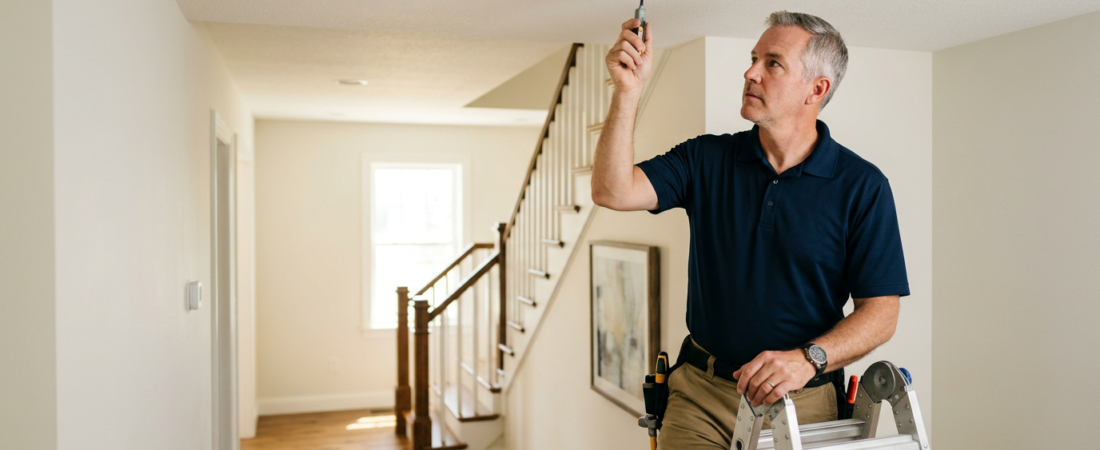
Smoke detectors are among the most critical safety devices in any American home. They provide early warning in the event of a fire, giving occupants precious time to escape. For homeowners, buyers, and sellers, understanding the functionality, placement, and maintenance of these devices is paramount. A professional home inspection includes a thorough evaluation of smoke detectors, ensuring they meet basic operational standards and contribute effectively to your home’s overall safety profile. Complete Guide to Smoke Detectors: Inspection, Maintenance, and Safety
What Home Inspectors Look For: Key Inspection Considerations
During a home inspection, our focus on smoke detectors is practical and geared towards identifying readily observable issues that could compromise safety. We evaluate several key aspects:
- Presence and Placement: Inspectors verify that smoke detectors are present in appropriate locations, typically on every level of the home, inside and outside sleeping areas. While specific code compliance can vary by jurisdiction and build date, the general principle is comprehensive coverage.
- Type and Power Source: We note whether detectors are ionization (better for fast-flaming fires), photoelectric (better for slow, smoldering fires), or dual-sensor. We also check if they are battery-operated, hardwired with battery backup, or interconnected (where one alarm triggers all others). Hardwired and interconnected systems are generally preferred for enhanced safety.
- Functionality: We test the ‘test’ button on accessible units to confirm they emit an alarm. This confirms the unit has power and the alarm mechanism is working. We do not typically test the smoke-sensing capabilities with actual smoke.
- Age and Expiration: Smoke detectors have a limited lifespan, usually 10 years from the date of manufacture. We look for the manufacturing date on the back of the unit. Expired units are noted as a deficiency.
- Carbon Monoxide (CO) Detectors: Often integrated with smoke detectors or installed as separate units, CO detectors are also checked for presence and expiration, particularly near sleeping areas and fuel-burning appliances.
Homeowner’s Smoke Detector Checklist & Procedure
As a homeowner, you play a vital role in maintaining your smoke detectors. Regular checks can prevent failures and ensure your family’s safety:
- Monthly Test: Press and hold the ‘test’ button on each detector. A loud beep confirms it’s working. If it doesn’t sound, replace the battery immediately.
- Annual Battery Replacement: For battery-only units, replace batteries at least once a year, even if they haven’t chirped. A good habit is to do this when you change your clocks for Daylight Saving Time.
- Check Expiration Dates: Locate the manufacturing date on the back of each unit. If it’s more than 10 years old, replace the entire unit.
- Clean Regularly: Dust and debris can interfere with a detector’s sensitivity. Gently vacuum or wipe the exterior of your smoke detectors every few months.
- Ensure Proper Placement: Verify detectors are installed on every level of your home, including the basement, inside each bedroom, and in the hallway outside sleeping areas. Avoid placing them too close to kitchens or bathrooms where steam or cooking fumes might trigger false alarms.
- Interconnected Systems: If you have interconnected detectors, test one unit and ensure all other connected units also sound the alarm.
Common Defects and What They Mean
During an inspection, several common issues with smoke detectors are frequently identified:
- Expired Units: Detectors older than 10 years are no longer reliable and must be replaced.
- Dead or Missing Batteries: The most frequent issue. A chirping sound usually indicates a low battery.
- Improper Placement: Detectors installed in areas prone to false alarms (e.g., directly above a stove) or not providing adequate coverage.
- Missing Units: Lack of detectors in required areas, such as inside bedrooms or on a particular level of the home.
- Disconnected Hardwired Units: Hardwired detectors that have been disconnected from their power source, rendering them inoperable.
- Painted Over Detectors: Paint can clog the sensing chamber, making the detector ineffective.
Maintenance and Repair Considerations
Most smoke detector maintenance is straightforward and can be handled by the homeowner:
- Battery Replacement: A simple DIY task. Always use the type of battery specified by the manufacturer.
- Unit Replacement: Replacing an expired battery-operated unit is also simple. For hardwired units, if you’re comfortable with basic electrical work, you can replace it yourself, ensuring the power is off at the breaker. Otherwise, a qualified electrician is recommended.
- Cleaning: Use a soft brush or vacuum attachment to remove dust from the vents.
- Upgrading to Interconnected Systems: If you have older, non-interconnected units, consider upgrading. Wireless interconnected units are available for easier installation without running new wiring.
When to Call a Specialist
While many smoke detector issues are DIY-friendly, some situations warrant professional help:
- Hardwired System Issues: If a hardwired detector isn’t working after battery replacement and cleaning, or if you suspect an electrical fault, an electrician should investigate.
- New Hardwired or Interconnected System Installation: For installing new hardwired systems or upgrading to a fully interconnected wired system, an electrician ensures proper wiring and code compliance.
- Persistent False Alarms: If a detector frequently triggers without apparent cause, and cleaning/repositioning doesn’t help, it might be faulty or indicate an underlying issue that a professional can diagnose.
- Carbon Monoxide Concerns: If a CO detector alarms, evacuate immediately and call emergency services. For persistent CO alarms or suspected leaks, contact your gas company or an HVAC professional.
Frequently Asked Questions About Smoke Detectors
Here are answers to common questions about smoke detectors:
Q: How often should I test my smoke detectors?
A: You should test all your smoke detectors monthly by pressing the ‘test’ button.
Q: How often should smoke detector batteries be replaced?
A: For battery-only units, replace batteries at least once a year. For hardwired units with battery backup, replace the backup battery annually.
Q: What’s the difference between ionization and photoelectric smoke detectors?
A: Ionization detectors are generally more responsive to fast-flaming fires, while photoelectric detectors are more sensitive to slow, smoldering fires. Many modern detectors are dual-sensor, combining both technologies for comprehensive protection.
Q: Where should smoke detectors be installed?
A: Install smoke detectors on every level of your home, including the basement. They should be inside each bedroom and in the hallway or area immediately outside sleeping areas. Keep them away from kitchens and bathrooms to avoid false alarms from cooking fumes or steam.
Q: How long do smoke detectors last?
A: Most smoke detectors have a lifespan of 10 years from the date of manufacture. After this period, the sensing components can degrade, making them less reliable. Always check the manufacturing date on the back of the unit and replace it if it’s expired.
Official Reference Standards: Learn more at the Consumer Product Safety Commission (CPSC).
Official Reference Standards: Learn more at the InterNACHI.